
Know what is active before treating the timber
Historic holes separated
We look for fresh evidence before assuming old marks need insecticide.
Five beetle groups covered
We identify signs linked to five named groups of wood-boring beetle.
Strength is considered
We flag timber that may need replacement rather than coating weakened wood.
Find out if the holes are still active
Old flight holes can remain in timber long after an infestation has ended, so a peppering of holes does not automatically mean live woodworm. We inspect for fresh exit holes, bore dust, larvae and weakening within accessible timber. We also consider moisture and ventilation, since damp conditions can make timber more inviting to some beetles. Our woodworm treatment covers common furniture beetle, wood-boring weevils, powder post beetles, death watch beetles and house longhorn beetles. Identifying the likely insect and the extent of damage helps us decide where treatment is needed and where historic marks can simply be monitored.
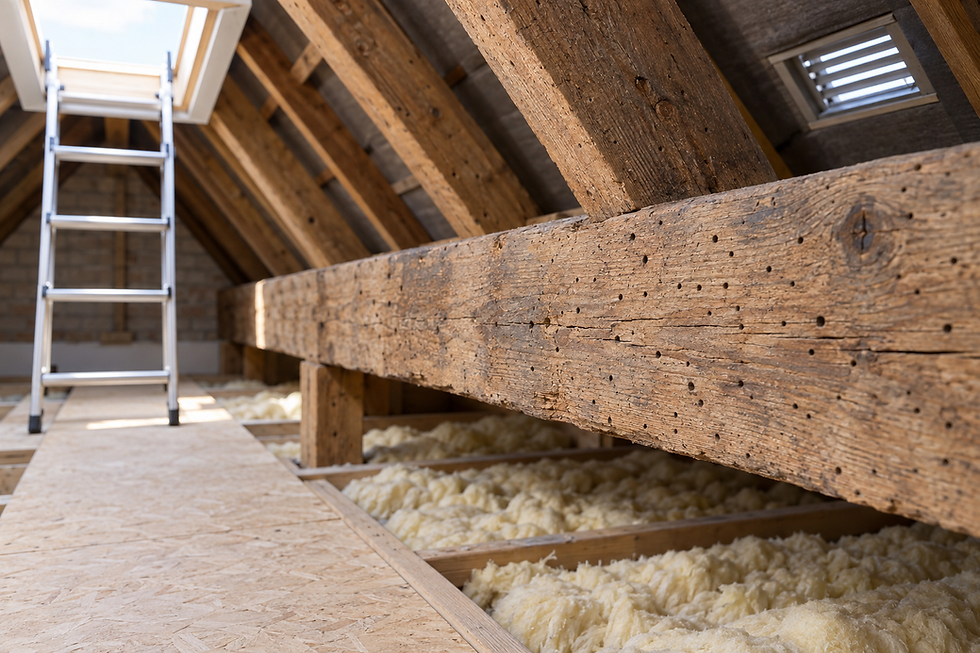

Treat accessible wood and assess lost strength
Where active infestation is confirmed, we can apply a specified liquid insecticide to accessible affected surfaces. Floor voids, roof spaces and concealed structural sections may need opening so the treatment reaches the relevant timber. Chemical treatment cannot restore wood that has already lost too much strength. Severely damaged structural members or furniture may therefore need removal and replacement. We also explain any moisture or airflow issue that could encourage further attack. After initial treatment, problem areas should be observed for at least a decade so fresh bore dust or holes can be investigated promptly.
Frequently asked questions
Do holes in wood always mean active woodworm?
No. Exit holes can remain for many years after beetles have gone. We look for fresh bore dust, new holes, larvae and other current evidence, then assess surrounding conditions before recommending treatment.
How do we treat an active infestation?
We apply a suitable liquid insecticide to accessible affected timber where specified. Hidden areas may need opening for proper access. If a structural section has lost too much strength, treatment may be combined with replacement.
How long should treated timber be monitored?
We recommend monitoring known problem areas for at least ten years after the first treatment. New bore dust, fresh holes or further weakening should be checked so possible reinfestation is caught rather than ignored.